- Free shipping on orders over ₹999
- Premium tea from Assam · Spices from Kerala
- Hand-blended in Jaipur — Nazakat in every sip
- Join the Chai Club — 10% off forever
- Join the Chai Club — 10% off forever
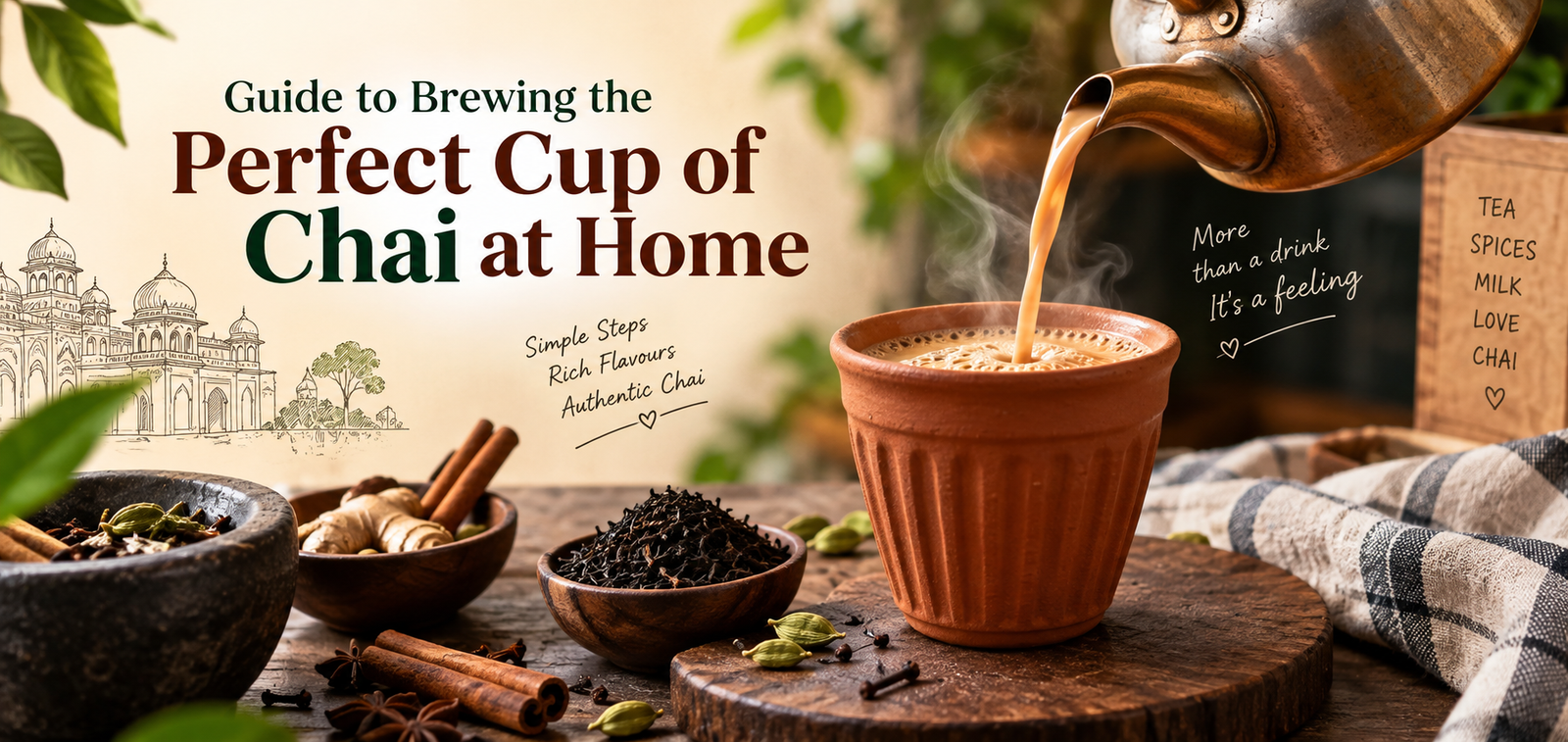
Rose cardamom chai brings together two very different sensory elements: the delicate floral character of rose and the warm, aromatic intensity of cardamom. The result is a chai that feels more fragrant and refined than a conventional spiced cup.
For Indian tea drinkers, the appeal is simple: you still get the familiarity of chai, but the aroma has a softer floral layer and the spice profile is led by cardamom rather than a heavy combination of spices.
Rose cardamom chai is a tea preparation that combines tea with rose and cardamom to create a floral, aromatic cup.
Cardamom is a well-established culinary spice. Spices Board India identifies small cardamom as Elettaria cardamomum and notes its pleasant aroma and taste.
Rose contributes a distinctly different sensory character. Research into rose herbal tea has identified floral and sweet aromatic characteristics, while also showing that the way rose is processed can influence its final aroma and flavour.
In a chai, these two ingredients create a useful contrast:
The important point is that rose cardamom chai is not simply regular masala chai with a rose flavour added. Its character comes from maintaining a balance between floral aroma and spice intensity.
The combination works primarily as a sensory pairing.
Cardamom is valued for its characteristic aroma, which comes from volatile compounds present in its essential oil. Scientific reviews identify compounds such as α-terpinyl acetate and 1,8-cineole among the important constituents associated with cardamom’s aroma.
Rose brings another aromatic dimension. Studies of rose tea have found that different processing methods can produce distinct floral, sweet, fruity or woody sensory characteristics.
That creates a simple contrast:
| Element | Sensory character |
| Rose | Floral and delicate |
| Cardamom | Aromatic and warm |
| Black tea | Full-bodied and structured |
| Milk | Creamy and mellow |
| Sugar | Sweetness and balance |
The goal is not for one ingredient to overpower the other. A well-balanced cup allows the rose to appear in the aroma while cardamom gives the chai its recognisable spice character.
One of the easiest ways to understand rose cardamom chai is to compare it with a traditional spice-heavy chai.
Rose creates a lighter aromatic impression. Depending on the rose material and processing, research shows that rose tea can develop floral and sweet sensory characteristics.
This makes the aroma noticeable before the first sip.
Cardamom gives the cup its stronger spice identity. Its essential-oil composition is responsible for much of its characteristic aroma.
The best result comes from balance rather than maximum intensity.
If the rose dominates, the drink can feel more like a floral infusion. If the spice dominates, the distinctive rose character can become difficult to notice.
For this reason, rose cardamom chai is best approached as a balanced aromatic chai, rather than simply a stronger version of masala chai.
The two drinks share the same basic idea—tea combined with flavouring ingredients—but their sensory direction is different.
| Feature | Rose Cardamom Chai | Regular Masala Chai |
| Main aromatic direction | Floral + cardamom | Spice-forward |
| Rose | Key flavour element | Usually absent |
| Cardamom | Prominent | Often one of several spices |
| Overall impression | Delicate and aromatic | Warm and robust |
| Best suited to | People who enjoy floral notes | People who prefer traditional spice character |
| Flavour complexity | Floral-spice contrast | Multi-spice profile |
Neither style is universally better. The choice depends on the type of chai you enjoy.
If you normally prefer cardamom chai but want something more aromatic, rose cardamom chai is a natural variation to try.
The idea behind this blend is nazakat—a sense of delicacy and refinement without losing the familiar comfort of Indian chai.
The recipe story is built around a simple principle: rose should add character, not overwhelm the tea, while cardamom should provide warmth without turning the cup into a heavy spice blend.
That balance is particularly important when the chai is prepared with milk. Milk can soften aromatic intensity, so the tea and spices need enough presence to remain noticeable after brewing.
The result is intended for drinkers who want something recognisably Indian but with a more delicate aromatic profile.
The brewing method determines how much aroma, strength and body you get from the cup.
Tea Board India recommends brewing black tea with boiling water and allowing it to steep for approximately 3–5 minutes according to taste. It also notes that boiling water for too long can negatively affect tea quality.
For a milk-based chai, use the following practical method.
Start with fresh water and bring it to a boil.
Do not repeatedly boil the same water for a long period. Tea Board India notes that water quality and temperature can affect the resulting colour and taste of tea.
Add the appropriate quantity of rose cardamom chai to the hot water.
Allow the tea to release its character before adding too much milk.
Add milk according to your preferred strength.
A higher proportion of milk creates a creamier, softer cup, while more water keeps the tea lighter.
Keep the preparation controlled rather than aggressively boiling it for an extended period.
The objective is to extract enough tea and spice character without making the cup unnecessarily harsh.
Add sugar according to your preference.
There is no single correct sweetness level for chai. The right amount is the amount that allows you to enjoy the floral and cardamom notes without covering them.
Strain the prepared chai into a cup and serve immediately.
For a more aromatic experience, drink it while hot, when the fragrance is easiest to notice.
Small changes can significantly alter the final cup.
Use slightly more tea or allow the tea to brew for longer within a reasonable range.
Use more water and reduce the brewing intensity.
Increase the proportion of milk.
Avoid excessive boiling and serve the chai hot. Aroma is an important part of how we perceive flavour.
Reduce the sugar rather than compensating by increasing the spice.
There is no fixed rule about when you should drink it.
However, its floral-spice profile makes it particularly suitable for occasions where you want to slow down and enjoy the aroma as much as the taste.
The delicate floral character works well for an evening cup when you want something different from a strongly spiced masala chai.
The unusual combination of rose and cardamom gives you something to talk about, making it suitable for serving when guests visit.
If you enjoy experimenting with tea, it can provide a change from everyday milk chai without moving completely away from the familiar Indian tea format.
Tea can be a thoughtful gift when the recipient enjoys trying distinctive flavours.
Rose cardamom chai is particularly suitable for someone who:
For gifting, the presentation matters, but the flavour profile should remain the main reason for choosing the tea.
The main established benefit discussed in this article is sensory: rose and cardamom contribute distinctive aroma and flavour to the tea.
Cardamom has been studied extensively for its phytochemical composition and potential biological activities, but laboratory and research findings on individual compounds should not automatically be presented as proof that drinking a particular chai will produce a medical benefit.
The same caution applies to rose. Research has examined its composition, sensory properties and potential biological activity, but that does not establish rose cardamom chai as a treatment for any medical condition.
Therefore, it is better to describe this drink in terms of flavour, aroma and tea experience rather than making unsupported health promises.
Good storage protects the qualities you actually want to preserve: aroma, flavour and freshness.
Keep the tea:
This is particularly relevant for aromatic blends because the sensory experience depends heavily on volatile flavour compounds.
Avoid leaving the pack open for long periods, especially in a humid kitchen environment.
Before buying, check:
Rose cardamom chai is best understood as a floral-spiced interpretation of Indian chai. Rose contributes delicate aromatic notes, while cardamom provides the warm, recognisable spice character that keeps the drink connected to traditional chai.
The key is balance: floral without being overpowering, aromatic without becoming harsh, and familiar without tasting ordinary.
If you enjoy cardamom chai and want to explore a more delicate flavour profile, rose cardamom chai is worth adding to your tea rotation.
Rose cardamom chai is a tea blend or preparation that combines tea with rose and cardamom to create a floral, aromatic and spice-led cup.
It generally combines floral notes from rose with the warm, aromatic character of cardamom and the underlying body of tea. Milk and sugar can make the flavour softer and sweeter.
No. Traditional masala chai is generally characterised by a combination of spices, while rose cardamom chai places greater emphasis on the floral character of rose and the aroma of cardamom.
They provide contrasting aromatic characteristics. Rose contributes floral notes, while cardamom provides a warm, sweet-spicy aroma. Research supports the distinct aroma characteristics of both ingredients.
Yes. A milk-based preparation can create a softer and creamier cup. The amount of milk can be adjusted according to personal taste.
Yes. If the tea blend is suitable for a water-based preparation, it can be brewed without milk. This will generally produce a lighter cup and allow the aromatic notes to be more directly noticeable.
For black tea, Tea Board India recommends around 3–5 minutes according to taste. For a milk-based chai, follow the preparation instructions supplied with the specific blend.
Not necessarily. The sweetness depends on how much sugar or another sweetener is added during preparation.
Yes. There is no general requirement that it must be consumed at a particular time of day. Many people may enjoy its floral aroma as an evening tea.
If the blend uses caffeinated tea leaves such as black tea, the resulting beverage will contain caffeine. The exact amount depends on the tea used and preparation method.
It should not be promoted as a treatment or cure for a medical condition. Cardamom and rose contain compounds that have been studied scientifically, but research on individual ingredients does not automatically establish medical benefits from drinking a particular chai.
Store it sealed in a cool, dry place away from moisture, sunlight and strong-smelling foods.
It is particularly suitable for tea drinkers who enjoy cardamom, floral aromas and speciality variations of traditional Indian chai.
It can be a suitable choice for people who enjoy speciality teas, floral flavours or cardamom-based chai.
A good cup should have a clear tea character with a balanced relationship between floral rose notes and aromatic cardamom, rather than allowing one element to completely overpower the others.