- Free shipping on orders over ₹999
- Premium tea from Assam · Spices from Kerala
- Hand-blended in Jaipur — Nazakat in every sip
- Join the Chai Club — 10% off forever
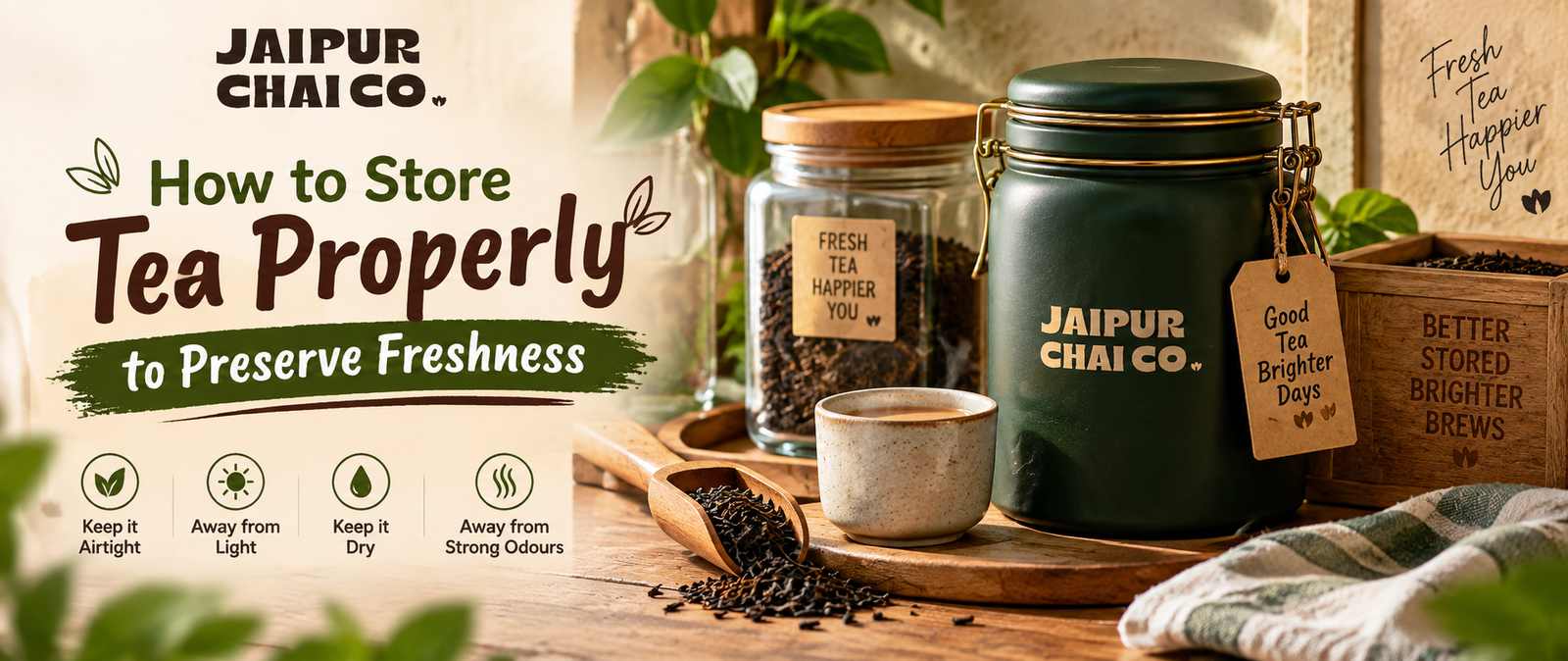
You can buy beautiful tea, brew it carefully and still end up wondering why the cup doesn’t taste quite as good as it did when you first opened the pack.
Sometimes, the problem isn’t the tea at all. It’s where you’ve been keeping it.
Think about the average Indian kitchen. The tea sits beside the stove because that’s where it’s convenient. The packet gets opened while the milk is boiling, the spoon goes in, and sometimes the packet stays open a little longer than it should. Then there are the spices, coffee and other strong aromas sitting nearby.
Tea notices all of that.
Over time, exposure to moisture, heat, light, air and strong odours can gradually affect its aroma and flavour. That’s why a good Tea Storage Guide doesn’t need to be complicated. For most everyday tea, the goal is simple: keep it cool, dry, dark and well sealed.
Tea is a dried product, but that doesn’t mean it is completely unaffected by its surroundings.
Moisture, heat, oxygen and light can all influence how tea changes during storage. Strong smells can also become a problem because tea can readily absorb surrounding odours.
You don’t need a laboratory setup to protect it, though.
Think about what happens every morning. You open the packet, take out your tea, leave it open while the chai is brewing and close it again. Doing that once isn’t going to ruin your tea. Repeating it day after day, month after month, is where the difference starts to add up.
Tea is meant to be dry. Introducing moisture into the container can affect its condition and contribute to quality deterioration.
This is particularly important in an Indian kitchen, where steam and humidity are part of everyday cooking.
Keep your tea away from the sink, steaming kettles and other wet areas. And one small habit is worth developing: always use a completely dry spoon when measuring tea.
This matters even more with masala chai blends containing ingredients such as cardamom, ginger, cinnamon and other spices.
That shelf right beside the gas stove? Convenient, yes. Ideal for tea, not really.
Repeated exposure to heat can accelerate changes in tea during storage. You don’t need to refrigerate everyday tea to solve this. Simply keeping it away from direct heat is a much easier place to start.
A cool kitchen cabinet or pantry shelf is usually a better home.
Tea doesn’t need to sit in the spotlight.
Light is another environmental factor associated with changes in tea quality over time. If your tea is stored in a transparent jar, keep that jar inside a dark cupboard rather than on an open shelf exposed to sunlight.
An opaque container makes this even easier.
Every time you open your tea container, you’re exposing the tea to its surroundings.
A good seal helps minimise unnecessary exposure to air and moisture. But there’s another reason to keep the lid closed: tea can absorb smells surprisingly easily.
That means storing tea right next to your garam masala, coffee, pickles or other strongly scented ingredients isn’t the best idea. You want the aroma in your cup to come from the tea itself, not from whatever happens to be sitting beside it.
For most Indian homes, you don’t need to overthink this.
A closed kitchen cabinet or pantry shelf that stays relatively cool and dry is a great place to start.
Keep your tea away from:
And if you’re wondering about the refrigerator, everyday black tea and chai generally don’t need to live there. Refrigeration can also introduce condensation and moisture when the tea is repeatedly taken in and out. For everyday storage, a dry, stable pantry is usually the simpler option.
The basic rule stays the same, but different teas can have slightly different storage considerations.
CTC tea is commonly used for strong Indian-style milk chai, thanks to the robust cup profile associated with this style.
When storing it, focus on the basics: protect it from moisture, heat, light and strong odours. Whether you’re making a quick morning cup or your favourite chai recipe, good storage helps preserve the character you want from the tea.
Loose-leaf tea can benefit from particularly careful storage because the leaves and their aromatic compounds are exposed each time the container is opened.
You don’t need special equipment. A properly sealed, dry and light-protective container is enough for most households.
And rather than buying more tea than you can reasonably use, buy an amount you can enjoy while it is still fresh and aromatic.
Masala chai brings another layer to the storage conversation because you’re not just protecting tea leaves. You’re also protecting the aromas of the spices in the blend.
A blend containing cardamom, ginger, cinnamon, black pepper, clove and fennel, for example, benefits from being kept properly sealed and away from competing kitchen aromas.
The same goes for floral blends such as rose and cardamom. The more aroma you want to preserve, the more carefully you should protect the tea from its surroundings.
Not necessarily.
If the original packaging seals properly and protects the tea from moisture, light and air, there’s no urgent reason to move it.
If you do transfer it, choose a container that gives the tea better protection. A well-sealed tea tin or an opaque, airtight food-safe container is a practical choice for everyday storage.
The goal isn’t to have the fanciest tea container in the kitchen.
It’s simply to give your tea a better environment.
Yes, but there’s one catch.
The jar should seal properly, and the tea should be protected from light. So if you’re using a transparent glass jar, keep it inside a dark cupboard rather than displaying it on an open shelf.
A beautiful jar is nice. A beautiful jar sitting in direct sunlight isn’t doing your tea any favors.
This is where things get a little more complicated.
There isn’t one universal number that applies to every tea. The tea itself, its packaging, the ingredients in the blend, storage conditions and how often the container is opened can all affect how its quality changes over time.
It’s also useful to separate three things:
Best-before date: The quality timeframe specified by the manufacturer.
Freshness: The aroma, flavor and overall sensory condition of the tea at a particular point in time.
Safety: Whether the product remains suitable to consume.
A tea can lose some of its aroma before its best-before date, especially if it hasn’t been stored well. That’s why the storage instructions on your own packaging matter.
For example, Jaipur Chai Co.’s Premium Assam Chai recommends cool, dry storage and carries a product-specific best-before period of 24 months from packaging. That shouldn’t be treated as a universal shelf-life rule for every Assam tea.
Your nose will often notice it before anything else.
The aroma may feel weaker. The flavour may seem flatter. The tea may simply have lost some of the character it had when you first opened it.
If you notice mould, insects or obvious moisture damage, however, don’t try to save it. Discard the tea.
You don’t need to turn tea storage into a project.
Just remember four words:
Keep the container properly closed. Use a dry spoon. Store it away from heat, sunlight, moisture and strong-smelling foods.
And don’t leave the packet open on the kitchen counter while you make your chai.
Small habits like these help preserve the aroma and flavour you’re actually buying the tea for.
A good cup of chai starts before the kettle, saucepan or teapot comes out.
It starts with the tea itself, and how you look after it.
Poor storage doesn’t necessarily make tea suddenly “bad.” More often, it quietly takes away some of what makes the tea enjoyable. The aroma becomes less expressive. The flavour becomes flatter. The cup slowly loses some of its character.
So the next time you open your tea cupboard, don’t just ask yourself which tea you’re reaching for.
Ask where you’re keeping it.
Because when tea is stored well and brewed thoughtfully, even your everyday cup has a better chance of tasting the way it should.
Keep tea in a tightly sealed, preferably opaque container in a cool, dry place away from sunlight, heat, moisture and strong-smelling foods. Tea Board India recommends an airtight, opaque container for tea storage.
Yes. A good airtight container helps reduce unnecessary exposure to air and moisture. A well-sealed tea tin is a simple, practical option for everyday tea storage.
For everyday black tea or chai, you generally don’t need to. Refrigeration can also introduce condensation and moisture when the tea is repeatedly taken in and out. A cool, dry pantry is usually the easier household solution.
Yes. Tea can absorb surrounding odours, so strong-smelling spices, coffee and other aromatic foods are best kept separately from your tea.
Yes. Light is one of the environmental factors associated with changes in tea quality during storage. An opaque container or dark cupboard provides better protection.
It’s better to avoid it. Heat and cooking vapour can create an unfavourable storage environment, particularly when the tea is exposed to them repeatedly over a long period.
Not necessarily. You don’t need special equipment, but loose-leaf tea benefits from careful sealing. A dry, airtight and light-protective container is a practical choice.
A weaker aroma, flatter flavour or noticeable change from the tea’s original character can indicate that it has lost freshness. If you see mould, insects or obvious moisture damage, discard it.
Absolutely. Tea can readily absorb surrounding aromas, which is why storing it next to strong-smelling foods, spices or coffee isn’t ideal.
Tea products have manufacturer-specified best-before information, but freshness and best-before dates aren’t exactly the same thing. Always follow the storage instructions and best-before information on your package.
There isn’t one universal freshness period for all Assam tea. It depends on the tea, packaging and storage conditions. Follow the specific manufacturer’s best-before date and storage instructions.
Only if the new container provides better protection. If the original package seals effectively and protects the tea from moisture, light and air, it may already be perfectly suitable.
Yes, provided it seals properly and the tea is protected from light. If the jar is transparent, keep it inside a dark cabinet rather than on an open shelf.
Keep them sealed in a cool, dry place away from strong odours. Because masala chai blends contain aromatic ingredients, protecting them from moisture and competing smells is particularly important.
It doesn’t improve the intrinsic quality of the tea, but good storage can help preserve its aroma and flavour for longer. That means you’re more likely to get a consistent cup when you brew it.
Some mornings, nothing feels right until you’ve had your first cup of chai. You know the feeling. You’re barely awake, your phone is already buzzing,
Rose Cardamom Chai: The Story, Benefits & How to Brew It Right Rose cardamom chai brings together two very different sensory elements: the delicate floral