- Free shipping on orders over ₹999
- Premium tea from Assam · Spices from Kerala
- Hand-blended in Jaipur — Nazakat in every sip
- Join the Chai Club — 10% off forever
- Join the Chai Club — 10% off forever
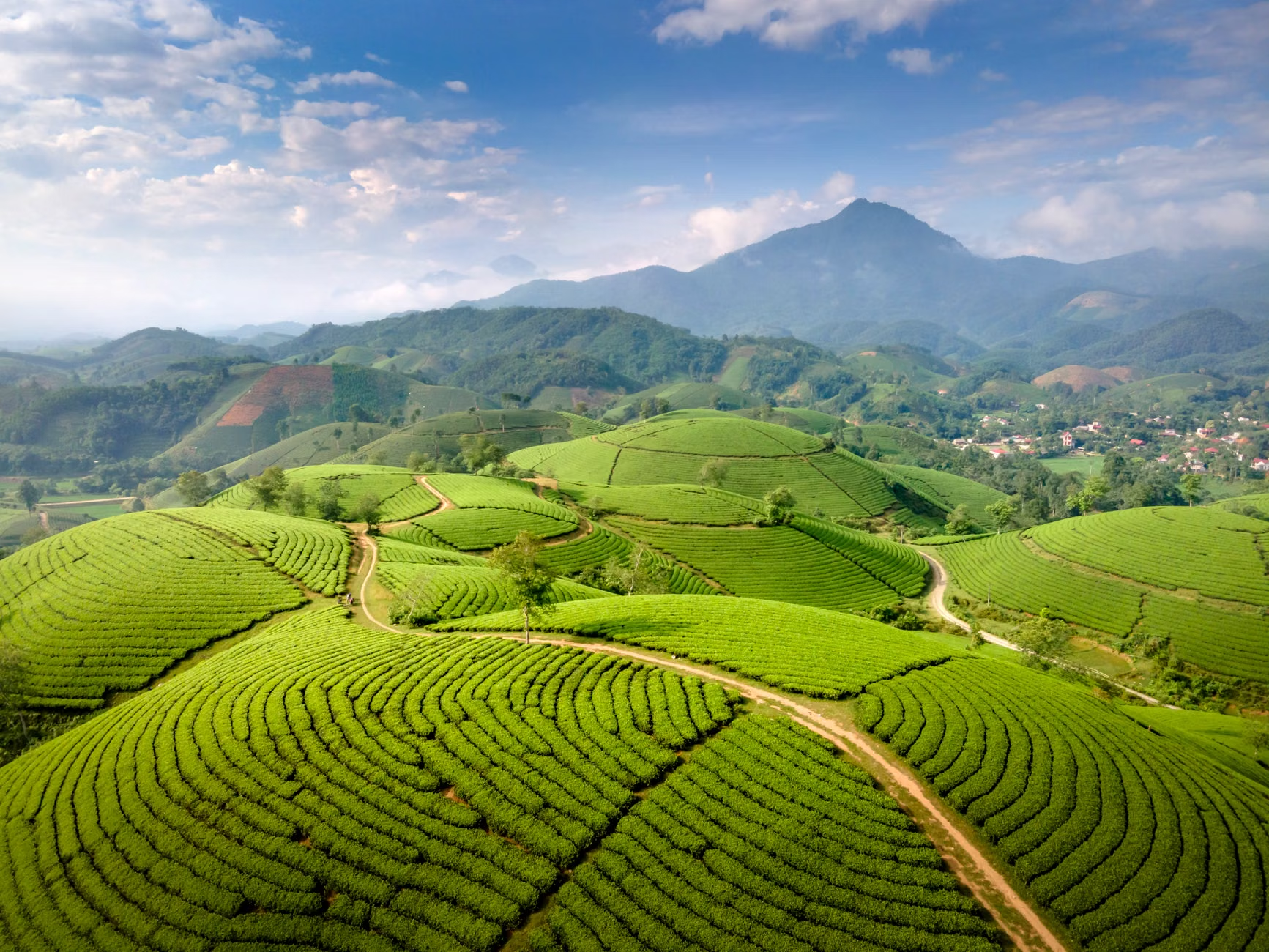
The Brahmaputra valley in Assam is one of only two places on earth where tea grows native. The plants here are not the delicate Chinese camellia sinensis — they’re the muscular Assamica cultivar, with leaves the size of a hand and a malty depth that no highland tea can match. If you have ever wondered why Indian chai tastes the way it does, this valley is the reason.
We drive out at dawn. The pickers are already in the rows, moving faster than seems possible, taking only the top two leaves and a bud. This is the raw material for every good CTC on earth. By 7am the first lot is at the factory. By 9am it has been withered, crushed, oxidised, and rolled. Freshness in tea is not a marketing word here — it’s a logistics problem, solved on a schedule that hasn’t changed in a hundred years.
Assam CTC — crush, tear, curl — is what makes chai taste like chai. Whole-leaf orthodox tea is beautiful, and it has its place in a porcelain pot with a slice of lemon. But it can’t stand up to milk and a six-minute simmer. CTC releases quickly, boldly, and holds its own against cardamom and ginger. That’s why it lives in every Indian kitchen and every station stall from Kanyakumari to Kashmir.
The name is literal. The leaves pass through toothed rollers that crush, tear, and curl them into tight granules the size of peppercorns. Each granule has enormous surface area for its size. Drop one into a hot pot and it starts giving up colour in seconds.
We buy from two estates in Upper Assam. Both are within a two-hour drive of Dibrugarh; both sit on the north bank of the Brahmaputra where the soil holds more moisture and the leaf grows heavier.
Fair trade is a phrase that has been sanded down by overuse. What it means for us, in practice: we pay a fixed premium above the state minimum, we pay it directly to the estate, and we publish the number in our annual report. It also means we buy the same lots year after year even in bad harvests, which is how you actually keep a garden alive. One-time buyers destroy small estates. Long-term buyers keep them going.
You cannot taste ethics in a cup. But you can taste a garden that’s been cared for.
Before we buy a single kilo, we cup it. That means brewing a strong, unsweetened, unmilked infusion and tasting it against a reference. We look for four things: colour depth, malt character, brightness on the finish, and — most importantly — how the cup holds when milk is added. A tea can be gorgeous on its own and fall apart the second it meets milk. Those teas are not for chai.
Once selected, the tea is shipped west in sealed foil-lined sacks. It arrives in our Jaipur blending room within ten days of packing. We blend, we rest the blend for two weeks so the spice oils marry the tea, and then we pack. From leaf to your kettle is usually under six weeks. Compared to most supermarket chai, which can sit in warehouses for a year, that’s how you taste the valley in the cup.
There is no shortcut to a good pot of chai. It starts here, in a river valley, at 5:30 in the morning. Everything that happens after — the blending, the packing, the brewing — is just protecting what the pickers already got right.